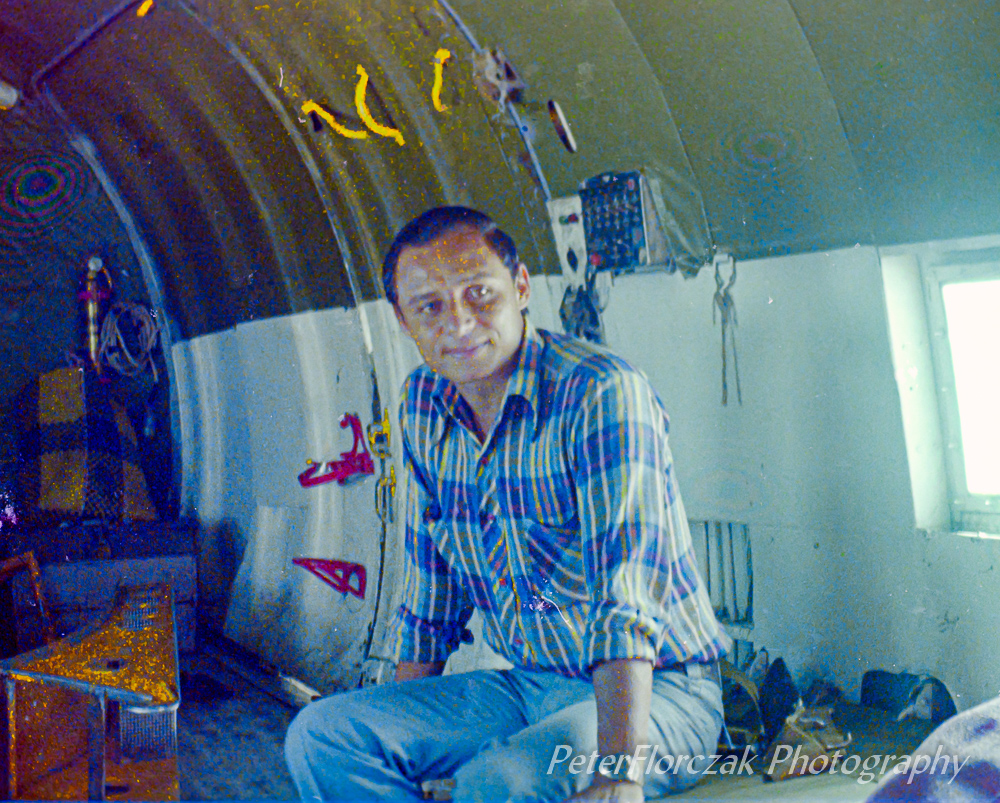
We Are Finally “Home” – Corn Island, Nicaragua

December 1977

Going from Puerto Limpira to Leimus was challenging, but comparing it to all of the adventures that we had experienced over the last year in Honduras, it was “uneventful.” Arriving in Puerto Cabezas, Nicaragua, it was yet another wait-and-see time. We waited almost a full month for a shrimp boat that was going out to the Corn Islands. We were getting very good at enjoying the boring times of our adventure. We were lucky enough to meet a Baptist preacher who said that he knew a guy that had a fishing cabin along one of the many rivers. We bided the time taking hikes through the jungle, reading, and lounging around.
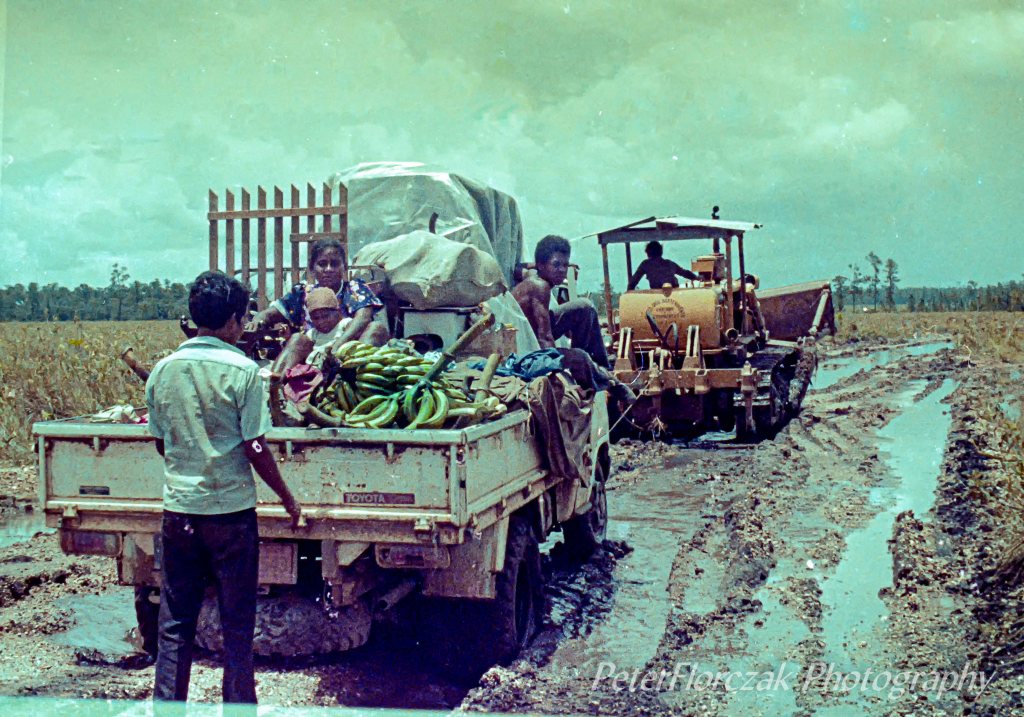
Going from Puerto Limpira to Leimus

Every few days we would go down to the municipal dock and ask the boat captains if they were going out to Corn Island. Most of them were going shrimping or lobstering to the Cayos Miskitos Islands, but eventually we found one who would take us. The captain told us that this was a working trip so it might be a while before they reached Big Corn Island. The good news was that he didn’t need us to work.  They would feed us and we could use the captain’s bed to rest in. The bad news was that we got a terrible case of lice, which the crew helped us get rid of by wrapping our heads in a dirty cloth and dowsing it with kerosene. Yes, it did work but….ouch!

The shrimp boat really started to rock and roll as we got further out to sea. It was kind of fun in a way, but also a little scary. We were out in the middle of the ocean on some rickety old wooden shrimp boat with a whole bunch of guys that we knew nothing about, headed out to the open sea to go to some place we knew nothing about. Despite the uncertainty, the trip was once again, uneventful.  I do remember however, when the water changed from a muddy brown to the deep Caribbean blue. After a long time, we finally saw our destination off in the distance. The hot noonday sun bounced off the white sandy beaches. Corn Island gleamed like an iridescent pearl. Rainy and I looked at each other and we instantly knew that we had found something precious. Even Nevada started to run around in circles chasing his tail and barking animatedly.

Pulling into port was like something we had been through many times before in our years of traveling around Central America. It was scary and exhilarating all at the same time. When we finally landed, there was absolutely nothing that was familiar. We had no comfortable point of reference. There was a road, but it was only a sandy track that almost circled the island as a well-worn rut. A few clapboard houses rose up from the sand. They sat perched on large 24-inch boulders. There were no happy smiling faces looking to see who the young gringos were. Every one of the dozen or so people who sat around the dock, had a disinterested kind of scowl on their black faces. Hardly any of them even looked our way as we passed to survey this new landscape. We found ourselves beginning to expect to be a short stay. Little did we know, at that point, that Corn Island would become our home for the better part of a year and a half!

If I ever wanted to create a populated island from scratch, I would start with a road just like this one.

We didn’t have too much luggage with us. There was just enough that we began looking for a spot to store it. The oriental fellow who ran the local variety store said we could leave our stuff at his store, so Rainy, Nevada and I walked off down the sandy road to see if we could find a place to stay. The road followed the ocean and the beach very closely. In some places the ocean actually washed over the road. I remember remarking to myself just what a lovely walk it was. If I ever wanted to create a populated island from scratch, I would start with a road just like this one. As we got some distance from town the water turned a deep, rich aqua blue. It was so clear that even from the road you could see the fish swimming against a beige-blue sandy background.

 Soon we came to a two-story building called Capt. Morgan’s Hotel. The beach widened at this point. It literally sat on a 15-foot-wide spit of land. The surf gently lapped at the first floor. I told Nevada to stay downstairs, and we walked up to see if we could find the owner. Captain Morgan himself was sipping coffee on the porch and looking out to sea. He didn’t get up. He simply looked at us with stern eyes. I said, “Good mornin’.” and he nodded. I poured our life story out to him in 30 seconds trying to be as personable as I could. He was not impressed. Finally, I asked outright if he had any rooms available.

He replied, “Yes.”

“Could you please tell me how much they are?”

“245 Cordovas.”

I quickly calculated. That’s $35.00 US I whispered to Rainy. I didn’t even need to discuss it with her. It was definitely more than we were willing to spend.

“That is just a little more than we can afford. Do you know of any place that we can camp?”

“Anywhere you like.”, he answered.

I politely thanked him and as we made our way back down the stairs, I caught Rainy’s eyes. We were both grinning from ear to ear.

“Looks like this just what we are looking for,” I said.

“Yep,” she answered, “I think we might just be here for a while!”

We looked over and saw that Nevada was wildly racing up and down the beach first chasing a tan colored ghost crab, and then biting at the gently lapping surf every time it made slapping sound as it hit the beach. We walked along the beach, arm in arm, exploring the new magical world that had just been opened up to us.

We were very young and happy, happy, happy to be finally home!

Alligators and Crocodiles, Oh My!

Puerto Limpera, Honduras
December 1977

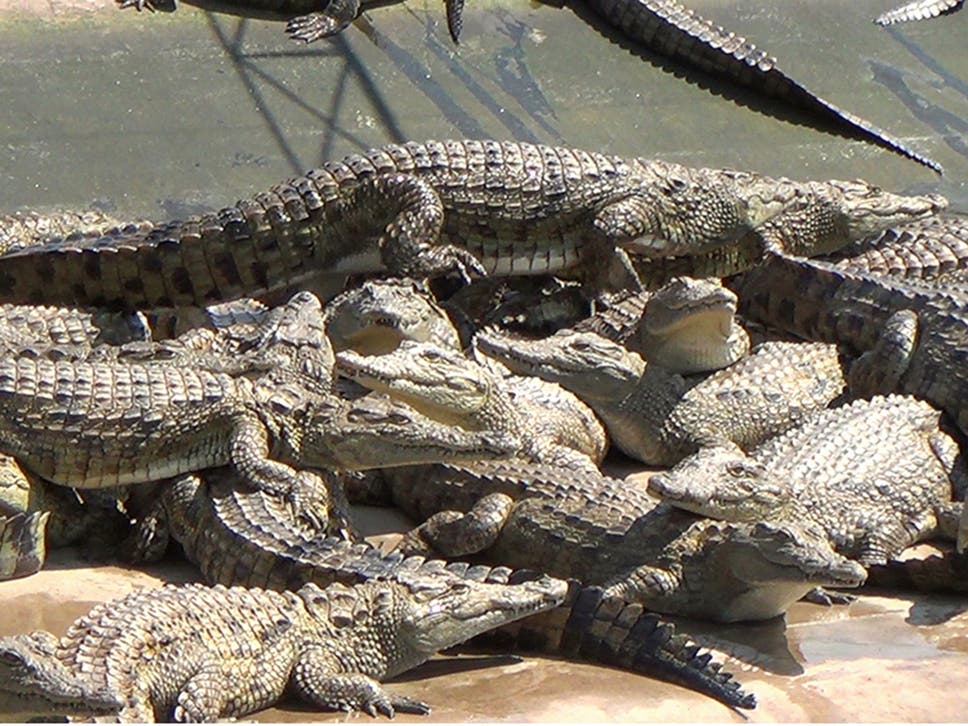
Back in Mocoron we still had a week to wait for the next government 4-wheel drive truck to take us back to Puerto Lempira. Once there we settled into the only pension (hotel) for a well-deserved rest, when who should arrive — Russel the Alligator Man. I had met Russel at a coffee shop on my last trip to the capital Tegucigalpa. He had spun a tail of having a farm in the Moskitia that raised and sold crocodile skins exclusively to the French. Honduras, in those days, was filled with many weirdos so, though I enjoyed his tales, I never really believed them. Still, he did show up and offered to let us come out to his place.

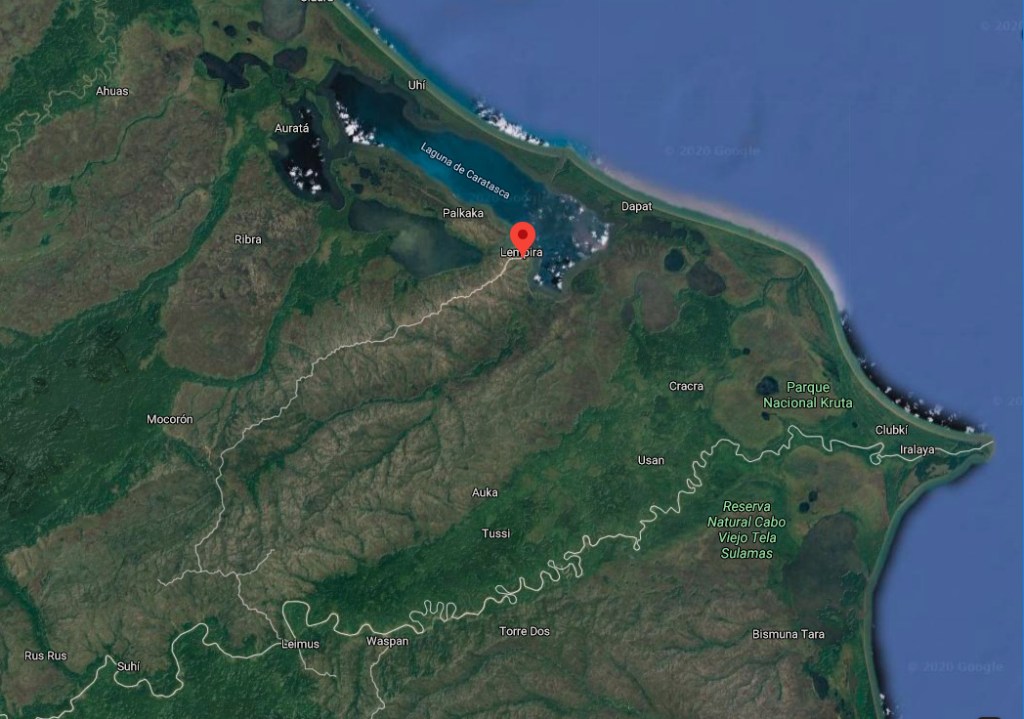
A Googled photo

He picked Rainy, Nevada and I up in his roughly built plywood-sided boat with a 4 HP in-board diesel engine. We cruised along the Laguna de Caratasca at what seemed like a break neck speed of 2-3 knots per hour. The engine, thought small, was really loud, and sent black diesel plumes off in all directions.

After several hours of this, I couldn’t think of anything really intelligent to say so I shouted, “Hey, Russell how much land do you have?” His reply was puzzling.

 “Well. I don’t really have any land, but you’ll see shortly.”

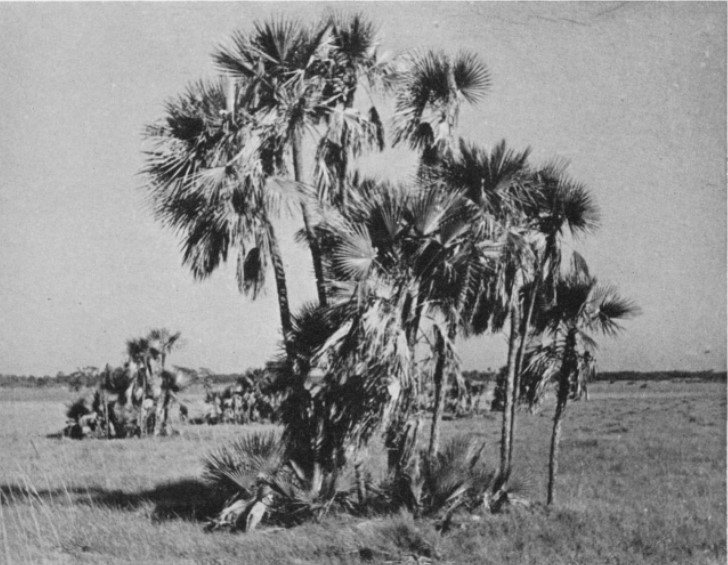
Shortly turned into evening when we reached a homemade dock constructed entirely of jungle popta sticks. We had seen that the Miskito Indians had used popta  (Sabal sp.) quite a bit, but here, everything including the roof was made of popta. It is a very straight palmetto topped tree that grows freely in the mangrove swamps. The hard-hollow wooden trunk is about 4 to 6 inches in diameter. It is a perfect building material, and Russell had built his entire complex out of these sticks. He was right, he had no land. Everything was built up above the swamp on raised sticks. There were wooden walkways that led to maybe 10 different structures. The roofs were also all thatched with palmetto popta leaves. That building style was something that would come in very handy for us when we moved on to Nicaragua.

Another Googled photo of” popta”.

BTW there are no alligators in Honduras. Something that gave us pause. Later we found out that Russell was called the Alligator guy, and not the Crocodile guy, because he was from Florida where they do in fact, have both species.

Like I said everything was elevated above the black, brackish water below. The Honduran government had told Russell that for every skin that he shipped out, he had to replace it with two baby crocodiles. So, there was a gigantic pen, made out of, you guessed it popta. In it were thousands of babies that he was raising to release back into the wild. Well, the outhouse was perched up on the walkway and cantilevered out over the pen. I will never forget the excitement of the little creatures whenever my business was finished.

After a week or so, Russell took us back to Puerto Lempira where we waited for a government truck to take us to the little frontier post on the border with Nicaragua named Leimus. Up to now, Honduras was one of my favorite years, but I think that Rainy might just disagree with me?  So, this was another adventure, and although we didn’t discover the White City, we did get to watch him capture a live 12-foot crocodile, fish in the river with dynamite, capture small crocodiles at night by shining a light across the water to see their red eyes, it was these things that provided me with one of my favorite adventure of all. They remain with me even to this day, 43 years later.

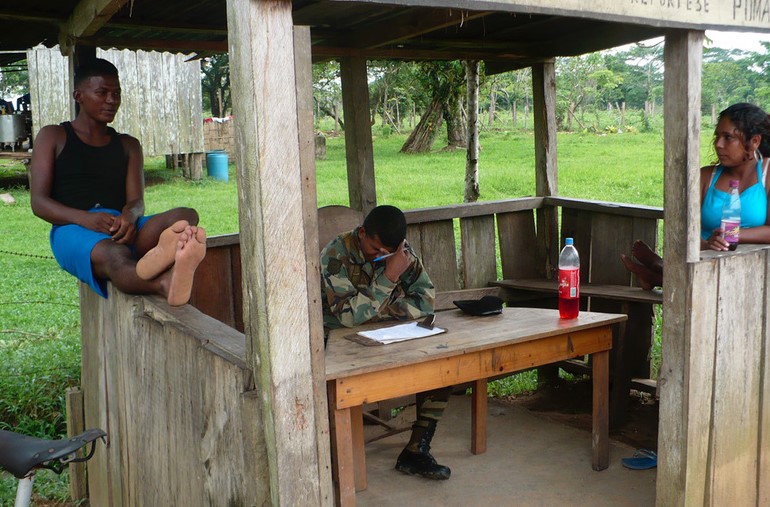
Here is the border guard at the Leimus, Nicaraguan border. This was a Googled photo, but it is nice to see that not much has changed in 40 years!

And here is the route. Look how squiggly the Rio Coco is which runs the length of the border between Honduras and Nicaragua.

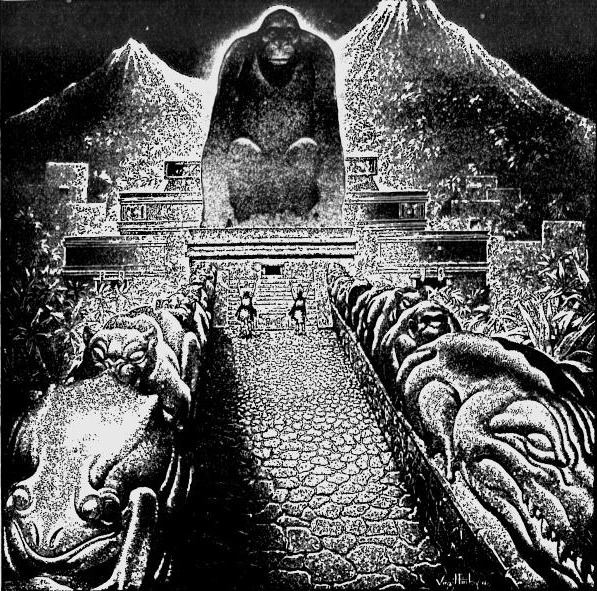
The White City – aka. Ciudad Blanca – aka. Lost City of the Monkey God — aka. Portal del Infirerno – aka. Kaha Kamasa

So many names for the same undiscovered place.
October 1977

Ok! A quick recap.

  1. Lost all of my travel photos in the mail
  2. Right before the adventure of a lifetime, I lost my camera and remaining film.
On our way to the Lost City of the Monkey Gods (aka. The White City)

At that point all I could tell myself was that my mind would have to act as a movie camera, and record all of the events so that I could play them back at a later date. Oh boy, was I lying to myself! But it was the only way I wouldn’t get depressed and jump off the now moving dugout?

Nonetheless, we were finally off. We had hired three short but muscular Miskito Indians from Mocoron who were now, slowly poling up river while Nevada, Rainy and I sat uncomfortably perched on the large sacks of food. Whenever we hit a cascade, which was often, we all had to get out and drag the canoe either up the rocky falls, or push and pull it around on the muddy banks. No small feat for this 25-foot water sodden tree truck of a canoe. At first, Rainy and I tried to help, but it quickly became apparent that we were doing more harm than good, so we backed off and just watched them struggle.

We did this for about a week. Each night we would pull over to the muddy bank, find a dry spot and the guys, using their machetes, would build us a lean-to with branches and leaves. Then one of the guys would ask for a few bullets and off into the jungle they would go. Bang! It usually only took one shot, and they came back with a bird or some other tropical animal. They would then clean and smoke it over the fire for our evening feast.

We all sat around that fire at night talking mostly in our common language—Spanish. Because it was both our second language, we were speaking like 5-year old’s, but that didn’t stop us. We had learned a little of their language, and many of their words were in fact English.

I would usually start with something like, “Como se dice ‘flashlight’ in Miskito?” (How do you say….)

They would all gleefully shout back, “Flashlight!”

“Como se dice ‘shoes’ in Miskito?”

“Shoes.”

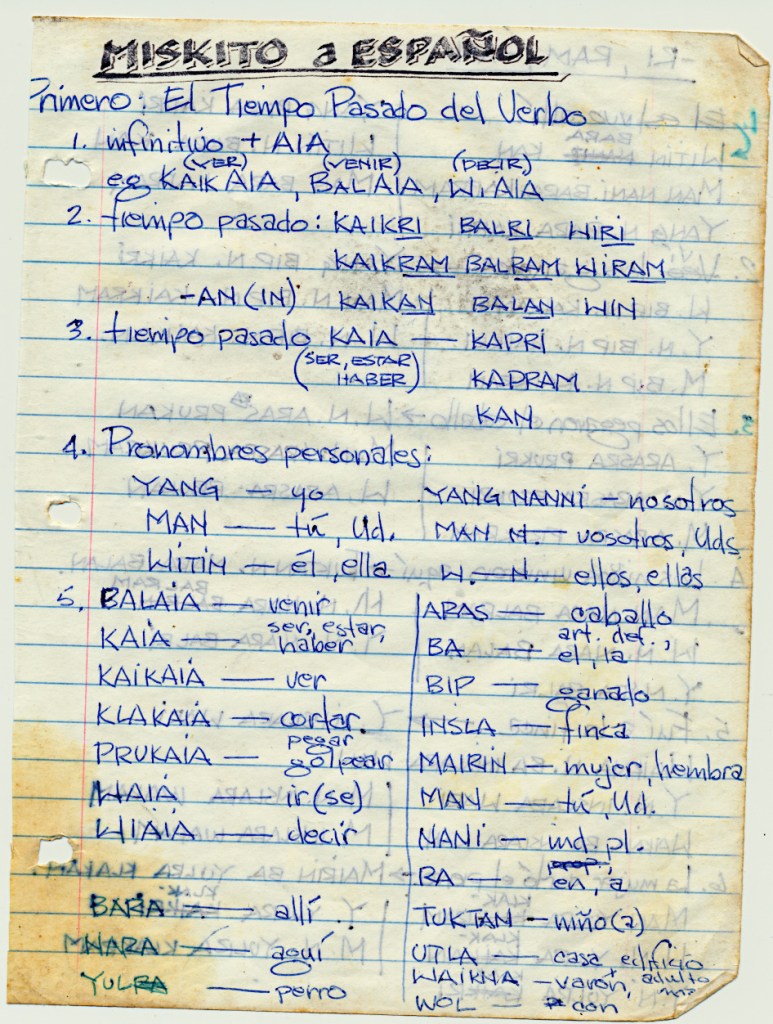
My crude dictionary translating Miskito to Spanish.

They never seemed to get bored of the game before we did. We continued on this way, like I said, for about a week, until we pulled over to the bank and hauled the boat out. They then picked up all of our belongings, hoisted them onto their shoulders and set out across the jungle. Once again, they wouldn’t let us carry anything as we just slowed the pace way down.

By about 3 mountains, and 6 rain-soaked days later we started to realize that our guides decidedly had no idea where the White City was. Rainy and I talked it over in the dead of night listening to the jungle wildlife make loud tropical sounds. We both said that if we wanted to salvage this wilderness trek, we needed a new PLAN! We were in a fabulous spot with a roaring river next to a large waterfall that was so loud it made it difficult to hear, but it was oh, so spectacular! I mean we spent all this time and energy and money to get here. Why not just relax and enjoy it?

Each day we sent out guides away. We found that we were really comfortable in the jungle.

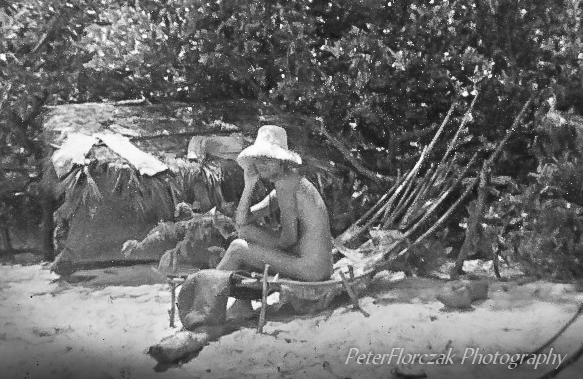
The next morning, we told our 3 friends to go back to the last campsite we had made. Each day they were to come back at dawn, get more bullets and food, and see if we were ready to go. And so it was that we spent another very happy week taking short walks, reading and lounging in the makeshift lounges that we had fashioned with local material. We found out that we really had a penchant for relaxing in places that would make other people cry. Hey, that “Boring Adventurer” thing was really starting to pay off!

All too soon, as the food began to run out, it was time to go back. The only high note was that while it had taken the guys days and days to pole up river it only took us two days to return. That was because so much rain had fallen since we started, that the river had now risen to a fast-moving torrent. We literally surfed our way back to Mocoron.

Why Are All of My Photos So Bad?

September 1977

To all of my photography followers, you might be wondering just why all of my photos are so bad? When we sold off everything in Guatemala there were a few items we just couldn’t bear to lose. Among them were our diaries and my thousands of photos. We bundled them carefully and mailed them all back to a relative in California. Unfortunately, they never arrived. That was something that we would not find out for a few years. The good news, I guess, was that on one of our trips back home, I had culled out all of my rejects and thrown them in the trash. My father had the foresight to retrieve and save them. These rejects are images I have been scanning in and they have required quite a bit of repair. They are the ones that you are now seeing here in the blog.

Map of Puerto Limpira and Mocoron in northern Honduras

Back to the travels, in the 70’s Honduras was like the wild west. It must have been like it was in the 1800’s in this country. It seemed like everyone had some scheme for making money. Some wanted us to invest in their goldmine, or smuggle Mayan artifacts or sell scarlet macaws, and these are just the ones that I can tell you about. Almost everyone had a gun, except of course us, but by then we were hardened adventure travelers so, of course we absolutely fell in love with the country.

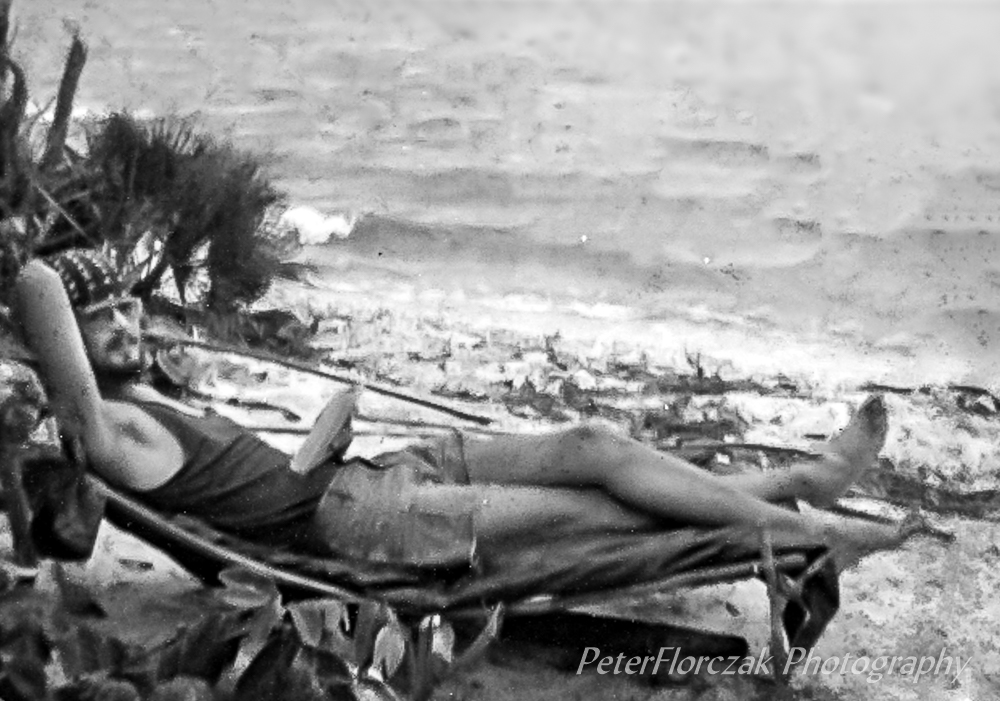
Here I am relaxing in a homemade lounge chair. There was always plenty of time to relax.

On one of our trips to the La Mosquitia, in northern Honduras, I met the governor of the Department of Gracias Adios. It was an area filled mostly with swamp-land, savannas and jungles. Unlike many of the do-gooders who were trying to change the “primitive” people, Rainy and I admired their simple way of life. We were living with the Misquito Indians, learning their language and their style of building with the materials they had around them. We felt that we had many things to learn from them. Perhaps it was because of this that when we met the governor, he took a liking to us. It was reinforced especially when I taught him to swim. In exchange. he taught me to fire a pistol. He then wrote us a very official looking letter that simply said we were friends of his. He stamped it with a whole bunch of official looking stamps and then signed it with the flourish of his very ornate signature. With that letter we were able to get on any government plane, boat or truck for free. It was even good for a steep discount at many hotels and restaurants. We used it quite a bit during the next year of our stay in Honduras.

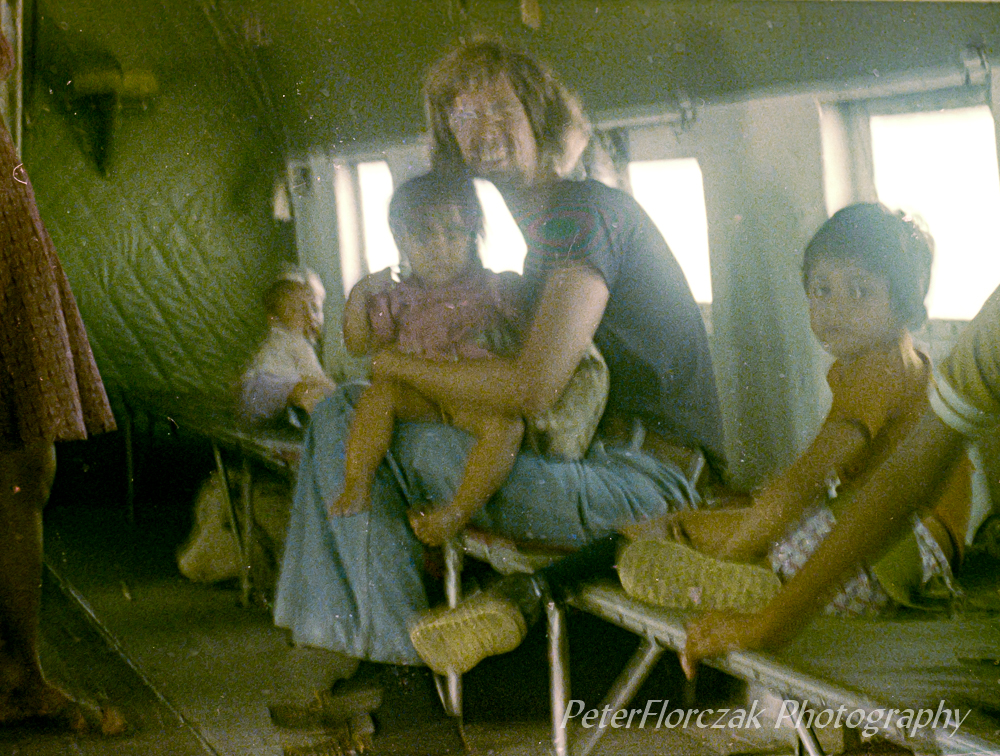
That me with some of the children of the governor of the Dept. of Gracias Adios

We had heard tales about the ancient Cuidad Blanco or “White City” hidden somewhere deep in the jungles of the La Mosquitia. By then we had developed many friendships in the area. National Geographic and the Smithsonian had tried to find it and failed, but one friend assured us that he could guide us right to it. So, we took a government plane to a dirt airstrip outside of the town of Puerto Lempira. There we waited almost 2 weeks for a four-wheel drive government truck to take us to the village of Mocoron. We brought with us a 50-pound bag of rice, a 25-pound bag of beans, a sack of salt, 25 D batteries and a box of 22 long rifle shells, and of course, a whole bunch of rolls of film. We hired 3 locals and their 25-foot long wooden dugout. We packed it up our supplies and headed out on the Rio Mocoron for the next “adventure of a lifetime.”

One of the better houses in Mocoron

That’s when, right at the very start of our journey, I dropped my camera and bag in the murky water. It would be another year and a half before I could get my hands on another camera! AND, spoiler alert, it would be 2016 before the White City was actually found. Here is a short video from the guy who actually found it. I think that you will find it interesting.