2020-10-07 Palo Duro Canyon


So after a couple of days of camping at the bottom of the second largest canyon in North America there are a couple of things that I now know.


It can be terrifically cold in the morning, and it can be blazingly hot in the afternoon. Get your exercise, be it walk, hike or bike ride, in in the morning, and either try to rest in the afternoon, or just take a long air conditioned ride. Another good thing to do is spend a good amount of time at the visitor center. There there are bad movies of the exploits of our ancestors to watch to maybe kill an hour or so. Smart, huh?
But seriously, it is a magical place with beauty every where you look. Wildlife just comes right up to you making it pretty easy to get a good photo of them
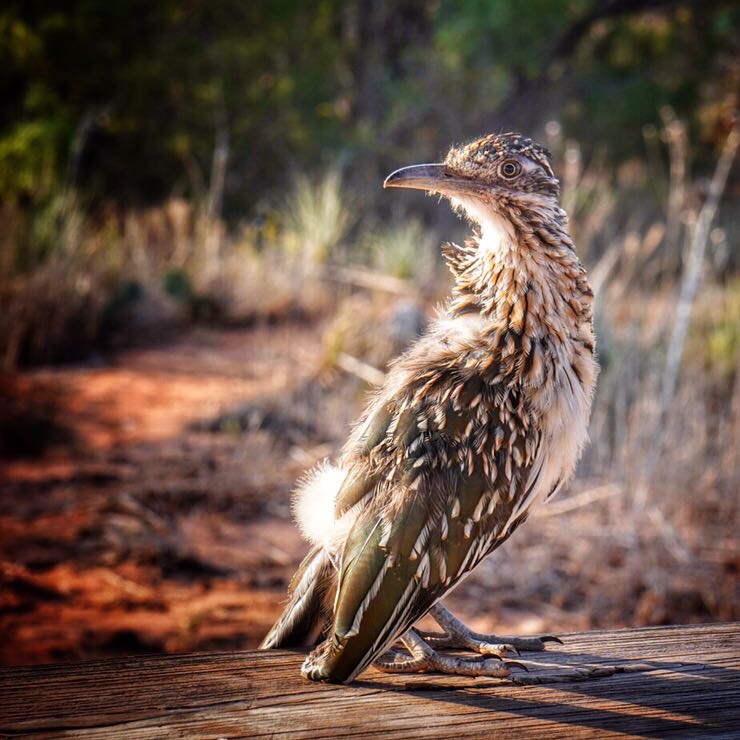
Roadrunner
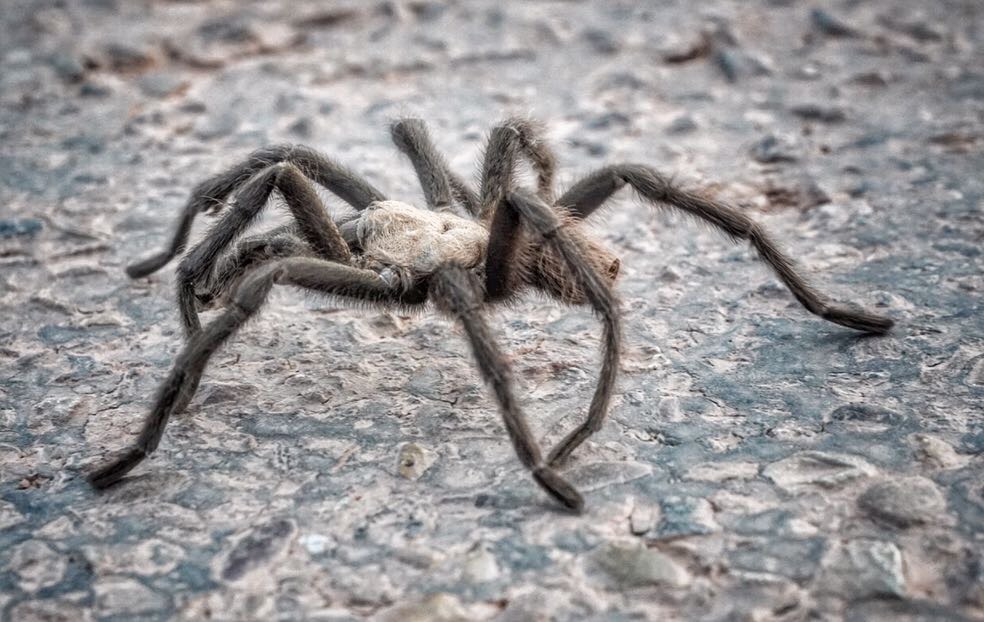
Tarantula
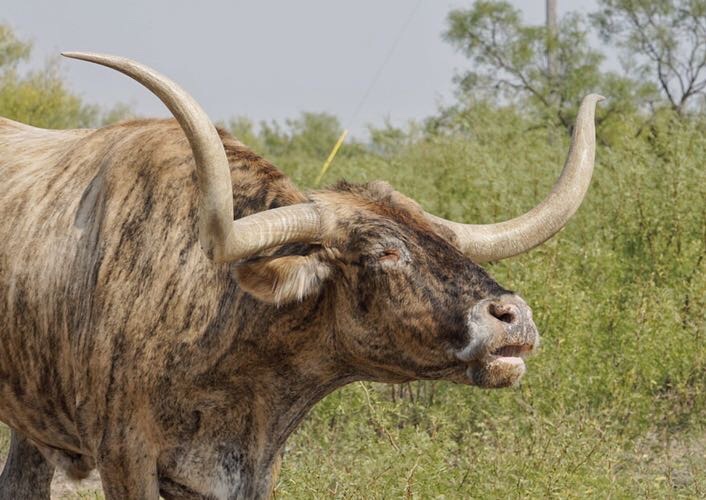
Longhorn. That’s Texas wildlife?
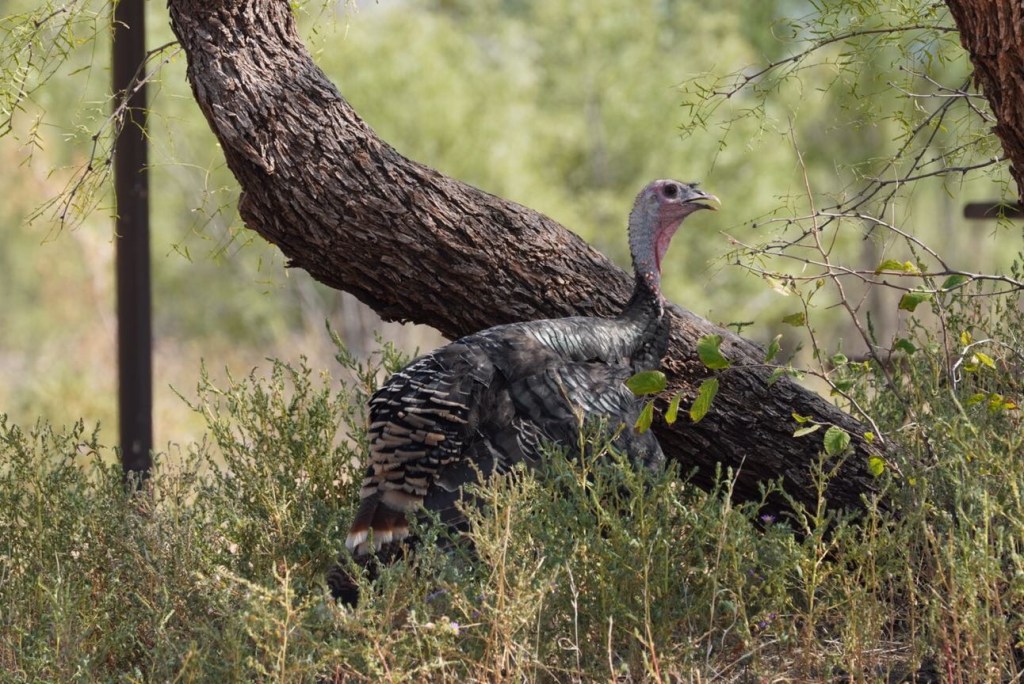
Turkeys

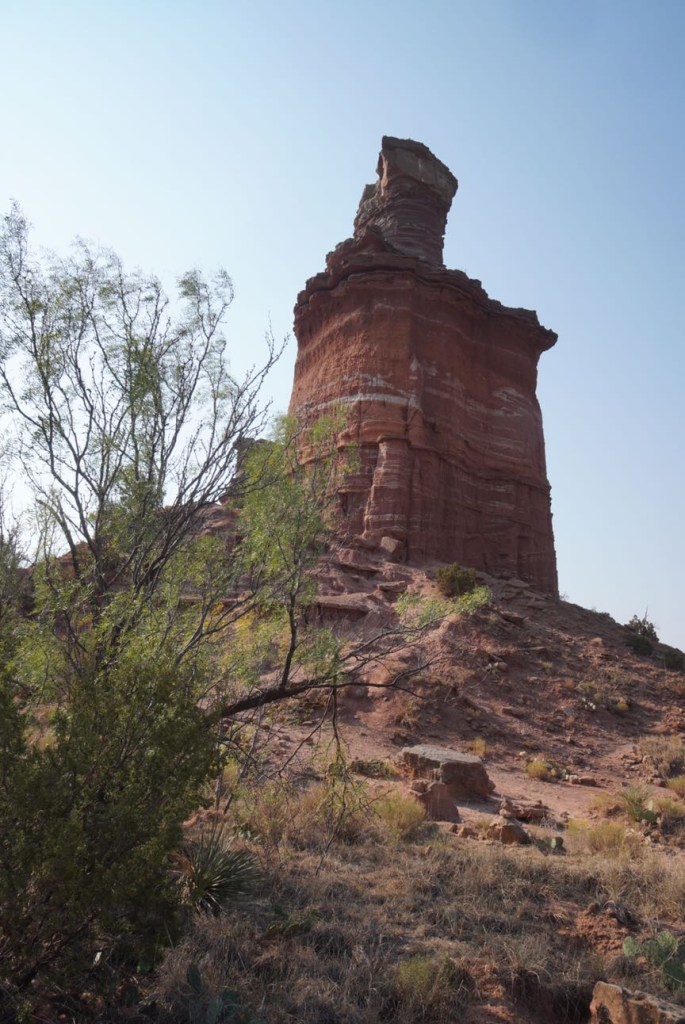
Kim and I took a walk to the Lighthouse. Probably the most famous of all walks here. It’s about a6 mile round trip. Not too bad in the morning, but the afternoon heat can make it a lot more challenging.
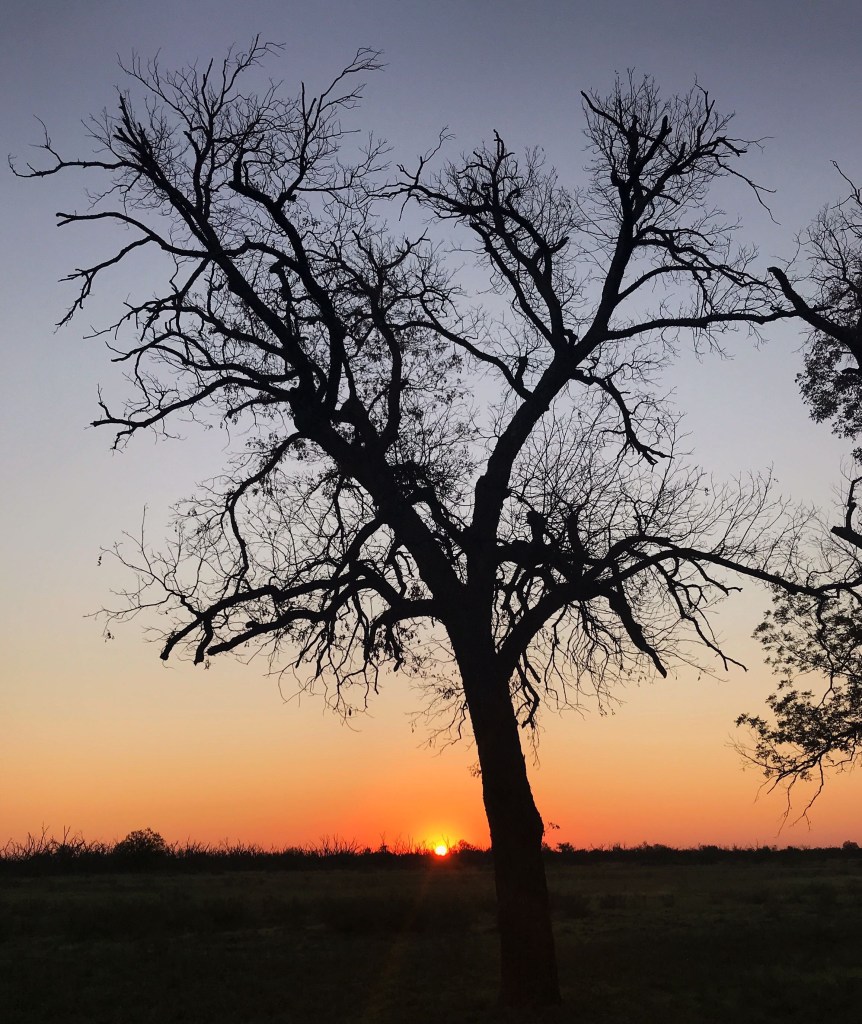
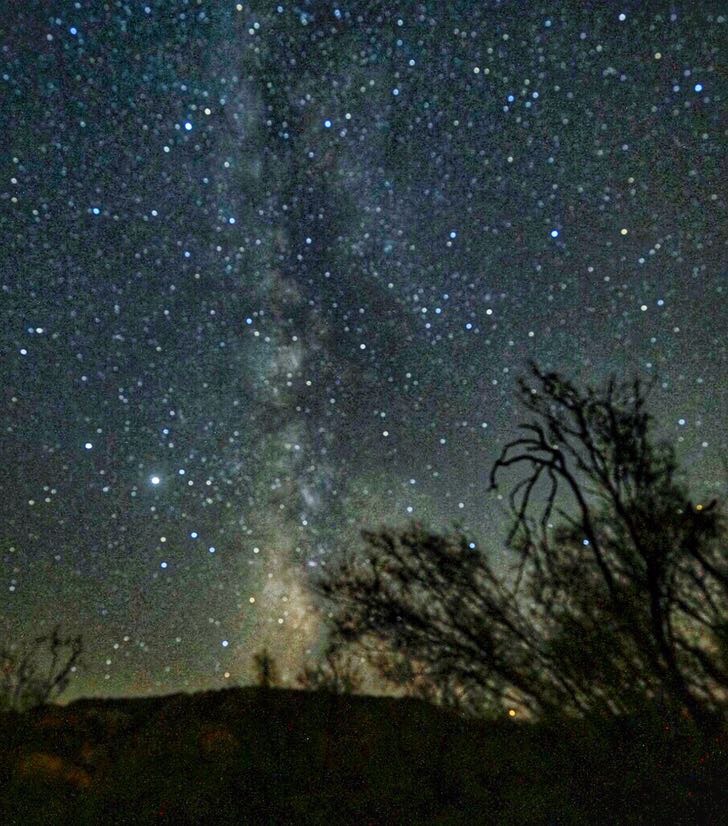
And of course the dark night sky always makes for some spectacular photography.
It’s a real nice treat to be here.
On Our Way to Palo Duro Canyon

San Angelo State Park

2020-10-04

We have started the 9 hour drive to Palo Duro Canyon State Park in northern Texas by stopping at a famous Texas stop sign.

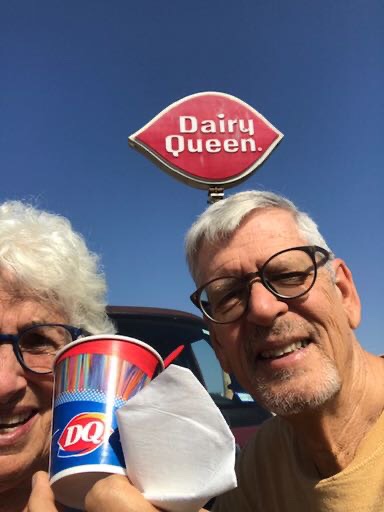
Sharing a socially distanced, but well deserved Blizzard.

We stopped after 4 hours of driving to camp at San Angelo State Park. Not too much to see here but a great place to stretch our legs and have a healthy non-Covid campfire.

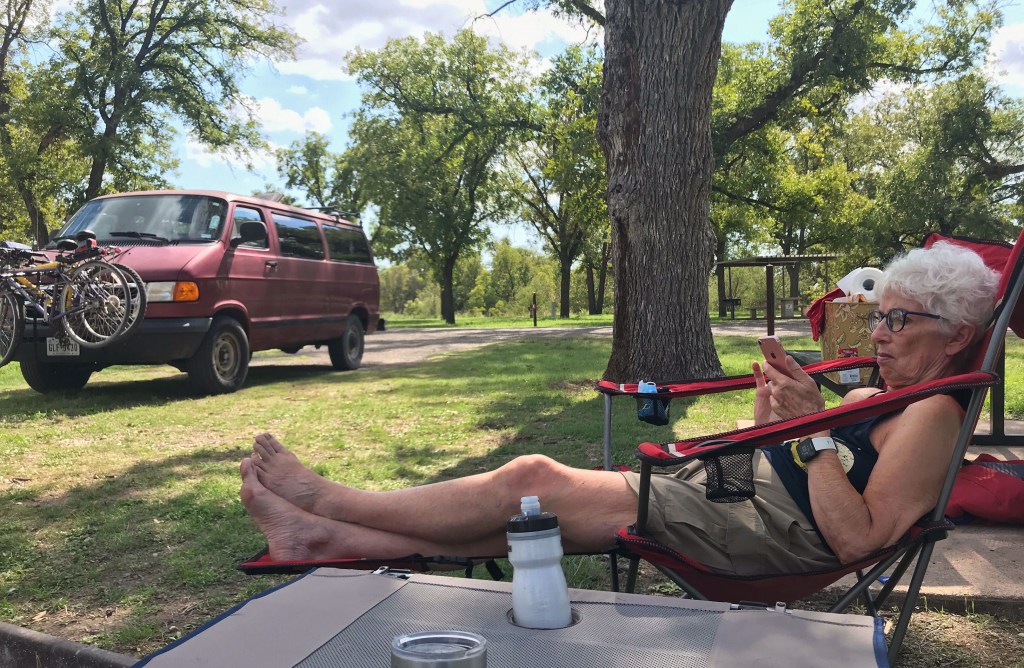
Kim catching up on the news.

In the chilly morning air, after a beautiful sunrise, we rest up before the arduous 5 hour drive to Palo Duro.

I think that it is a sign that it is going to be a great trip.
Another sign? A happy wife makes a happy trip!

Hopefully I will have some cell service in the park? If I do I’ll share some of my photos. Hasta la vista, baby!

The Story Continues and Now the Work Begins

Corn Island, Nicaragua
March 1978

It was pretty hard to get a truck out to our place

There was so much work to do on our newly acquired property. No-one had ever lived on it so there wasn’t even a road to get to it. Just a sandy track that was mostly used by Mr. Campbell and his horses. It was sure to get most vehicles stuck. We were happy to see that the middle of the island, which was a true swamp, was filled with popta plants. From living with the Misquito Indians in Honduras, I had learned the technique of building a thatched house using only the popta palm tree.

Let the party begin

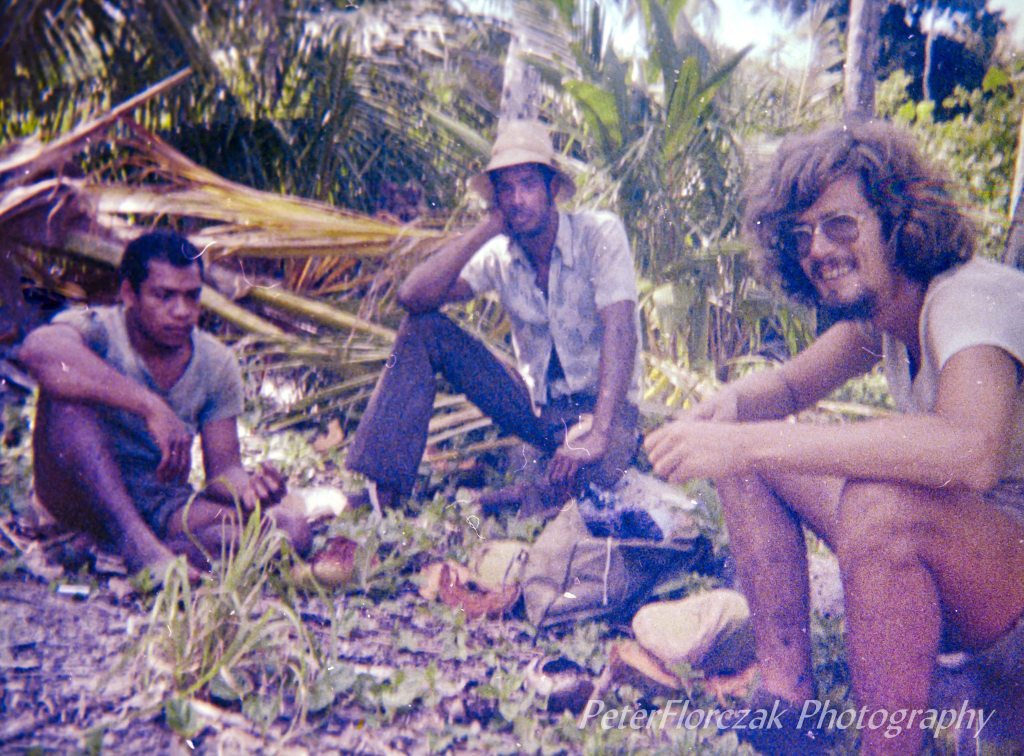
The plan was to build 3 small houses leaving room for 9 others along with a communal cook-house/rec center. Finding someone to help us was almost impossible. One of our friends said that no one wanted/needed the work, but if we could somehow turn it into a party we might have a better chance of getting help. Sounded reasonable, so we made a plan! We bought a bunch of food and beer, and asked any abled body male if they were interested. To our surprise they all showed up.

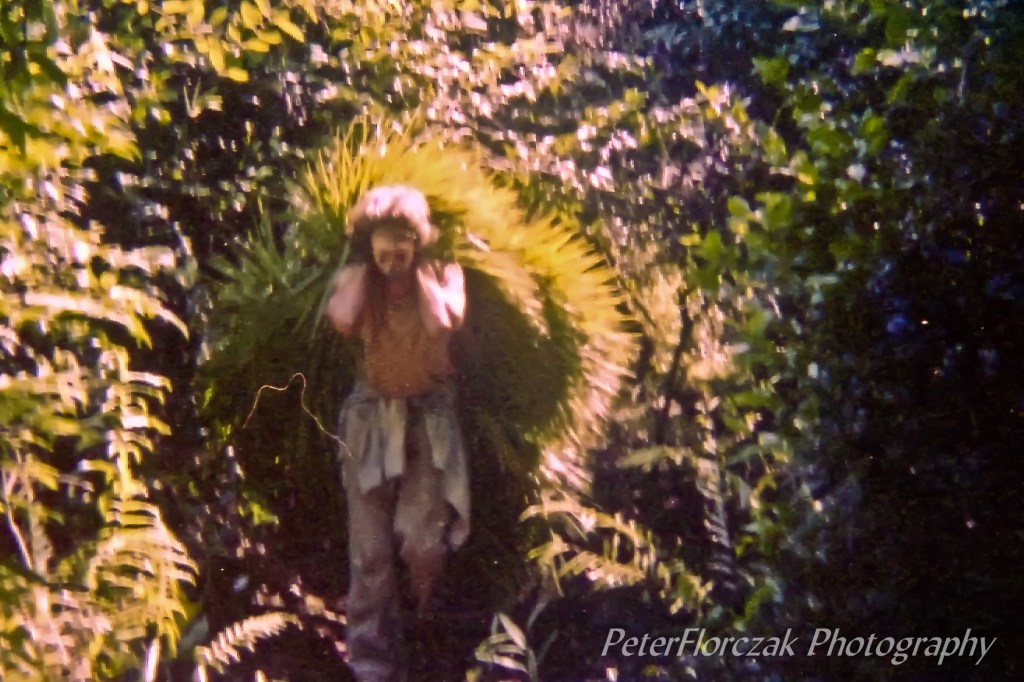
That’s me hauling out about 500 popta leaves out of the swamp. We needed 30,000 just to finish one house!
Boy them are some short-short pants.
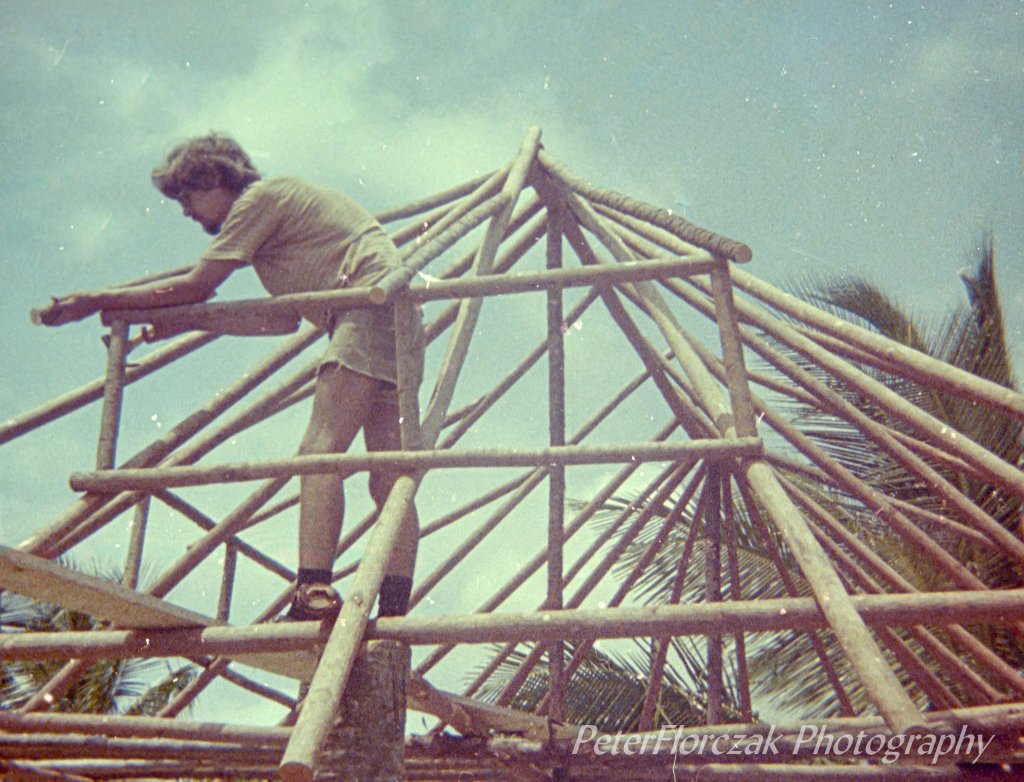
Now the serious construction work began. We also needed about 200 popta trunks for one house.

In no time at all – really about three months of hard-hard work – we were beginning to see the makings of our first house. The only tools that I had to work with were a machete, a hammer, a drill and my most useful tool a 99 cent kitchen knife.

Looking good!

The islanders thought that we were indeed crazy. They called this type of house a “trash house.” No one, they said all too often, in their right mind would live in something that only their great ancestors would build. Most days, a group of them would come down to Shallow Water, sit on the beach, have a smoke and a drink, and watch us work. Even though on Corn Island this type of construction was only used for building temporary structures, I knew that the popta leaf, if aged and properly laid, was good for about 20 years.